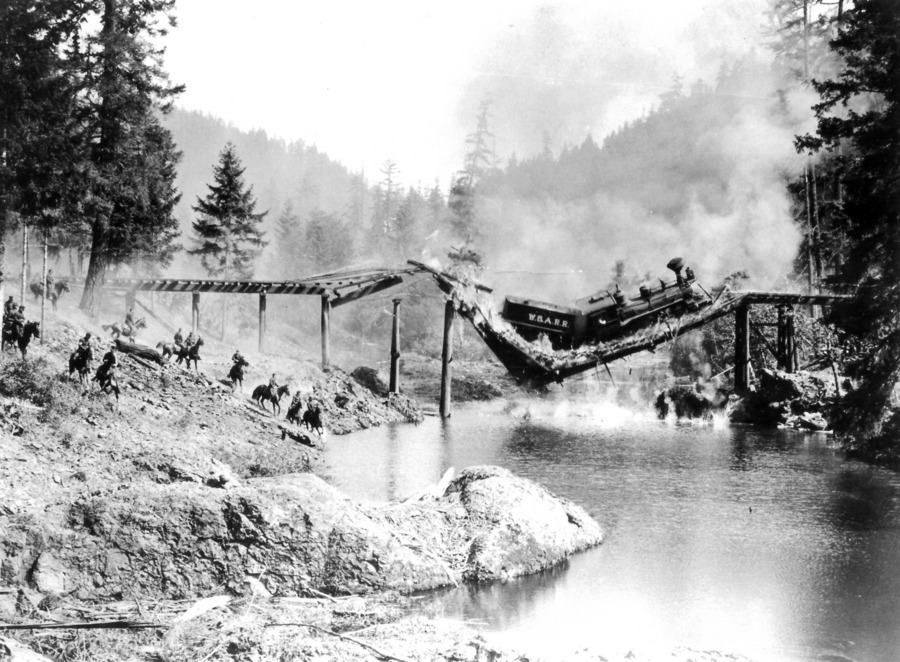
I was more proud of that picture than any I ever made.
Buster Keaton: Cut to the Chase
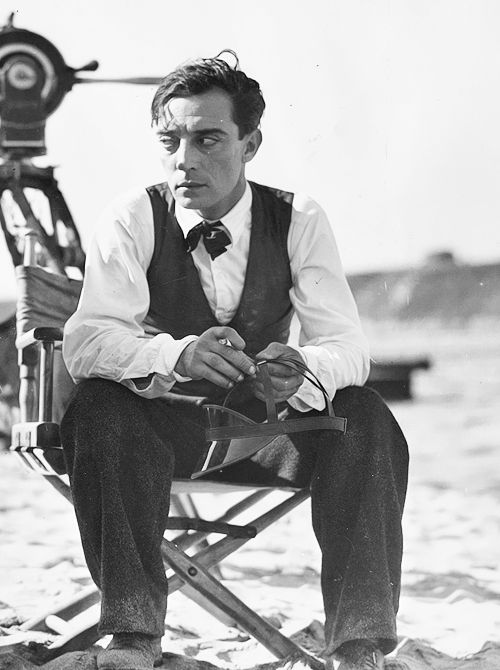
On Keaton and The General
Nicknamed "The Great Stone Face," Buster Keaton is known today as one of the greatest stars of the Hollywood silent era. The early years he spent in the vaudeville theatre circuit prepared him for a life of storytelling, daring stunts, and physical expressiveness.
After several successful years making short films, Keaton began working on feature length pictures. He found success with titles such as Our Hospitality (1923), The Navigator (1924), Sherlock Jr. (1924), and the Cameraman (1928). However, his 1926 film The General is often viewed as his greatest achievement, seamlessly blending thrilling action sequences, comedy, romance, and dramatic Civil War battle reenactments. Keaton's portrayal of his earnest protagonist Johnnie's efforts to recapture his beloved locomotive after it is seized by the enemy can be described as the first true action movie.
Film budgets at the time paled in comparison to that of The General's, yet its failure to turn a profit consigned Keaton to a restrictive deal at Metro–Goldwyn–Mayer that cost him his artistic independence and ultimately, his career. Despite this, The General was selected for preservation by the Library of Congress in the 1980s due to its cultural and aesthetic significance. It is now with the golden gift of hindsight that we can recognise it as one of the greatest American films ever made.